Chile's Most Unpredictable City
I had a great experience with this rental company. What really stands out is their flexibility — something quite rare in Chile. We were even able to rent a baby seat and a stroller together with the car. Their support is responsive and genuinely client-oriented. Highly recommended!
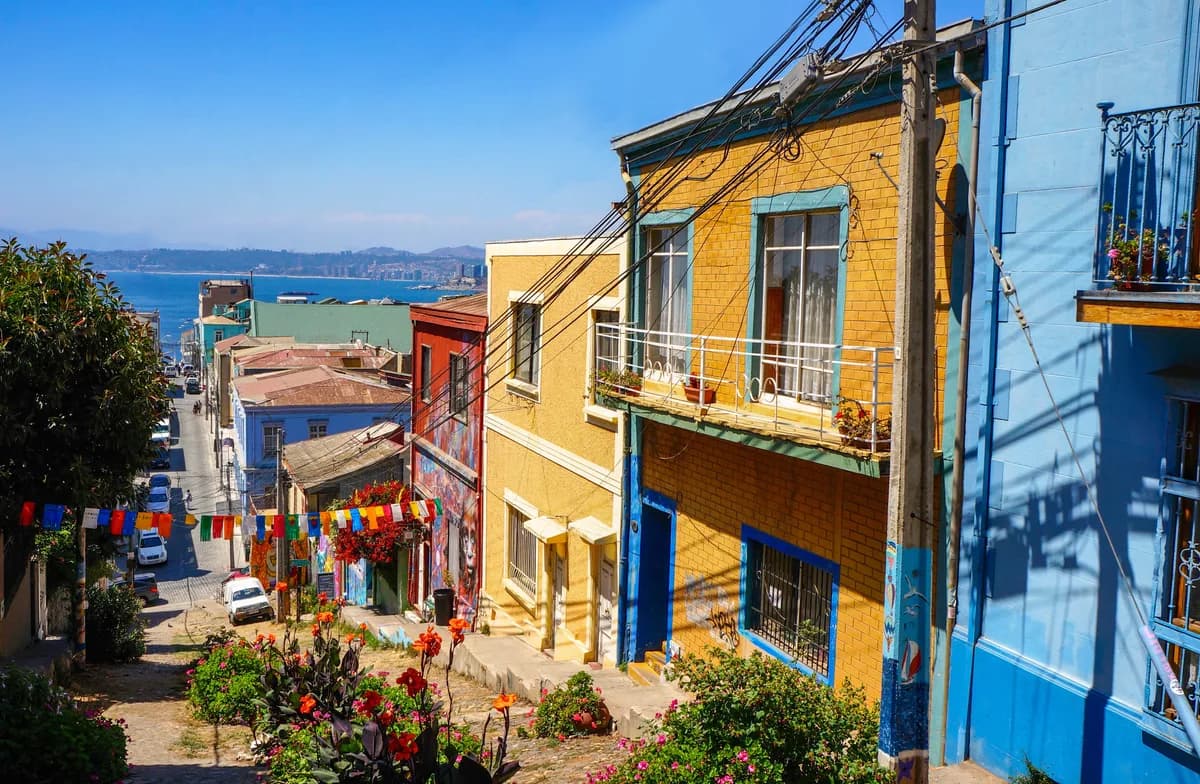
Valparaíso is not polished. It is not symmetrical. It is not easy. Streets climb and twist; facades peel and glow; the port hums below.
It is a city built vertically — stacked on more than 40 hills, facing the Pacific, shaped by trade, earthquakes, fires, sailors, artists, and reinvention. That mix of history and grit is what gives Valparaíso its edge.
People don't visit Valparaíso for perfection. They come for character: street art and ascensores, cobblestones and sea air, and a spirit that has outlasted every disaster.
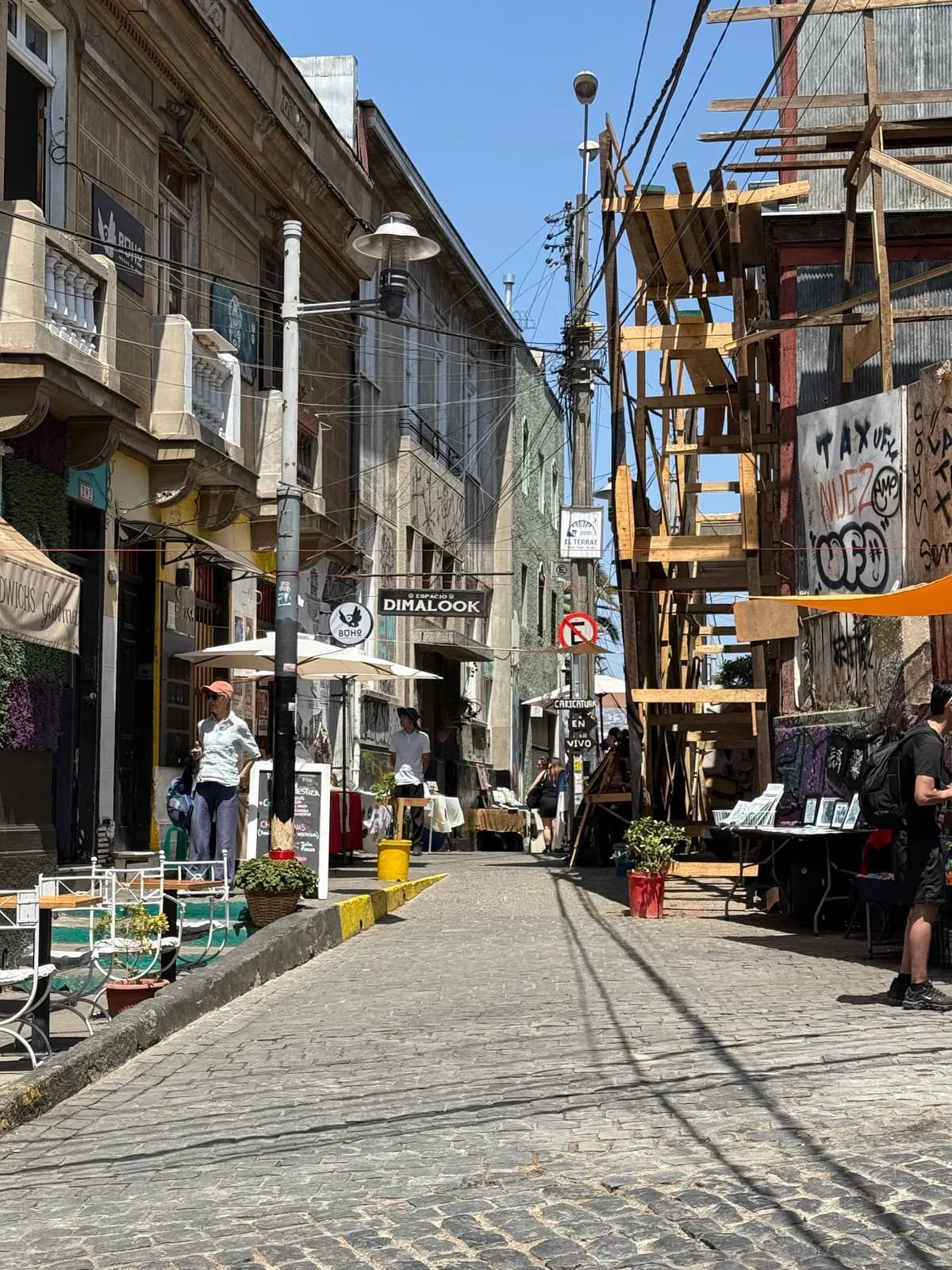
This order starts in the historic port zone, visits the naval museum on Cerro Artillería, then takes you up to Cerro Alegre and Concepción, across to Cerro Cárcel for the cultural park, and finishes on Bellavista for La Sebastiana and street art. Allow a full day.
Map: Plaza Sotomayor — Start here. The main square is dominated by the blue Edificio Armada de Chile and the Monument to the Naval Heroes of Iquique. Hub for several ascensores. Free; allow 30–60 minutes.
Map: Plaza Matriz — The historic heart of the port, where Valparaíso began. Cobblestone streets, 19th-century Iglesia La Matriz, and period architecture. Declared a Historic Monument in 1971.
Map: Museo Marítimo — Naval museum in the former Naval School on Cerro Artillería. Ship models, uniforms, weapons, and maritime history. Reach via Ascensor Artillería from Plaza Aduana. Daily 10:00–18:00.
Use a funicular instead of climbing. A few hundred pesos per ride. Ascensor Concepción (1883), Reina Victoria, El Peral.
Map: Cerro Alegre — Wander murals (including Templeman), colorful houses, and cafés. Palacio Baburizza on Paseo Yugoslavo 176: municipal fine arts museum, Tue–Sun 10:00–19:00.
Map: Cerro Concepción — Right next to Alegre. Paseo Atkinson, painted staircases, cafés and bars. The two cerros are the heart of "postcard" Valparaíso.
Map: Paseo Yugoslavo — One of the best viewpoints over the bay. The name comes from Pascual Baburizza, a Croatian immigrant who built the terrace and named it "Yugoslavian Promenade" in honor of his South Slav heritage. He also built Palacio Baburizza here and left his art collection to Valparaíso.
Map: Parque Cultural — Former prison (1906–1999) turned arts center on Cerro Cárcel. Murals, exhibitions, theater, terrace views. Access via Subida Cumming. Daily 10:00–20:00. Free.
Map: La Sebastiana — Pablo Neruda's former house, now a museum. Neruda (1904–1973) was Chile's most famous poet, Nobel laureate, and diplomat. Stunning port views. Reach via Ascensor Espíritu Santo (from behind Plaza Victoria). Book ahead in high season.
Map: Museo a Cielo Abierto — On Bellavista: about 20 murals by Chilean artists on walls and staircases. Free and open air. Same hill as La Sebastiana — combine them. Access via Ascensor Espíritu Santo.
In the 19th century, Valparaíso was one of the most important ports in the world. Before the Panama Canal opened in 1914, ships traveling between the Atlantic and Pacific had to sail around Cape Horn. Valparaíso became the main stop for refueling, repairs, and trade.
British, German, and Croatian immigrants settled here. You still see their influence in architecture, churches, cemeteries, and surnames.
For a period, Valparaíso was wealthier and more internationally connected than Santiago.
Then the Panama Canal opened.
Trade shifted. The port declined. Fires and earthquakes reshaped the city. But the hills remained — and the people adapted.
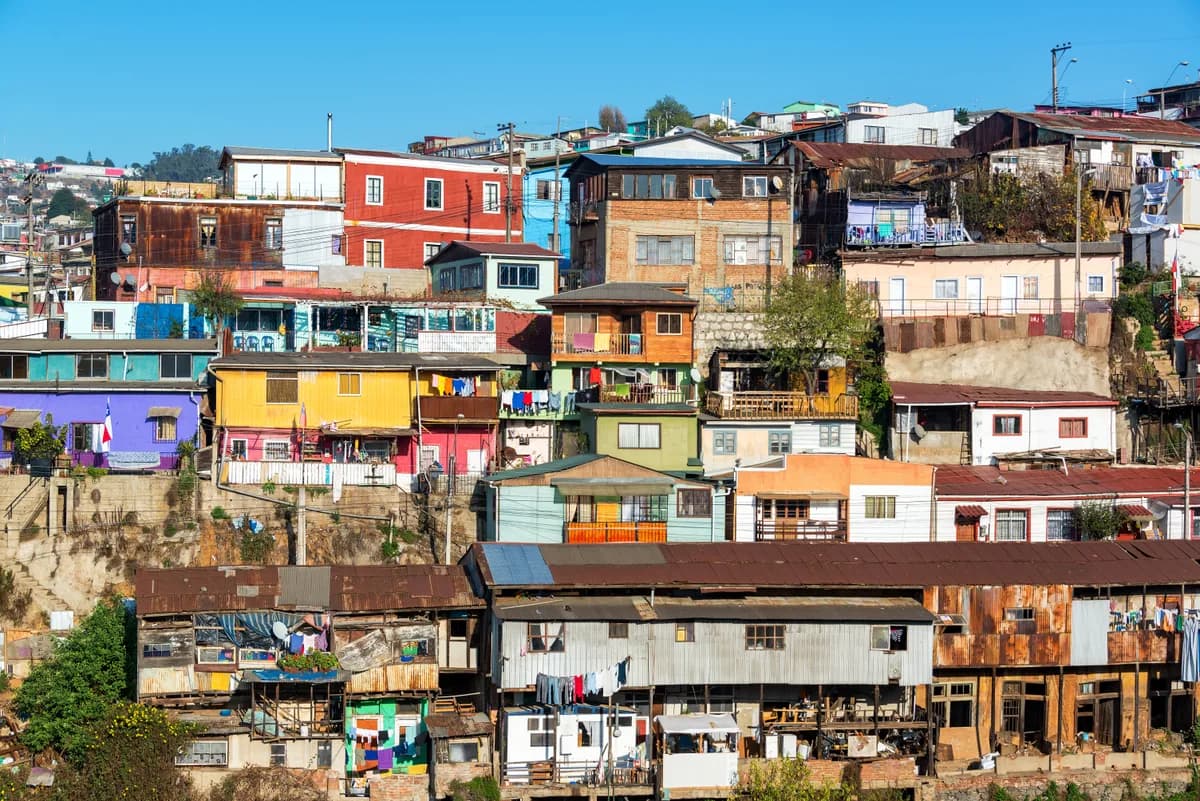
In 2003, the historic quarter was designated a UNESCO World Heritage Site.
What makes it special is not just old buildings — it's the way the city is constructed:
Valparaíso is one of the few cities where urban planning had to negotiate gravity.
Valparaíso has been repeatedly tested by natural disasters.
The 1906 earthquake devastated large parts of the city. Fires followed. Much of what you see today was rebuilt after destruction.
In 2014, massive hillside fires destroyed thousands of homes.
Yet the city always rebuilds.
There's a local understanding that the city is temporary, fragile, and constantly evolving. That instability is part of its identity.
The cerros are fingers of the Chilean coastal range — a natural amphitheater around the bay. The city began on the flat port strip; as trade boomed in the 19th century, settlers climbed the slopes. Each hill was claimed and built up in its own way, which is why no two cerros feel the same.
Cerro Alegre and Cerro Concepción are the most visited — colorful, creative, filled with cafés and murals. Neighboring cerros like Bellavista and Cárcel add La Sebastiana, the Open Sky Museum, and the Parque Cultural to the mix.
But beyond them, other hills feel more residential, raw, and local. Some have few visitors and no gentrified cafés; you walk past laundry, corner stores, and views that belong to the people who live there.
The rule of Valparaíso: if a street looks quiet, it probably is; if it looks chaotic, it probably is too.
Exploration here is not linear. It's vertical. Stairs and ascensores replace the grid; getting lost is part of the point.
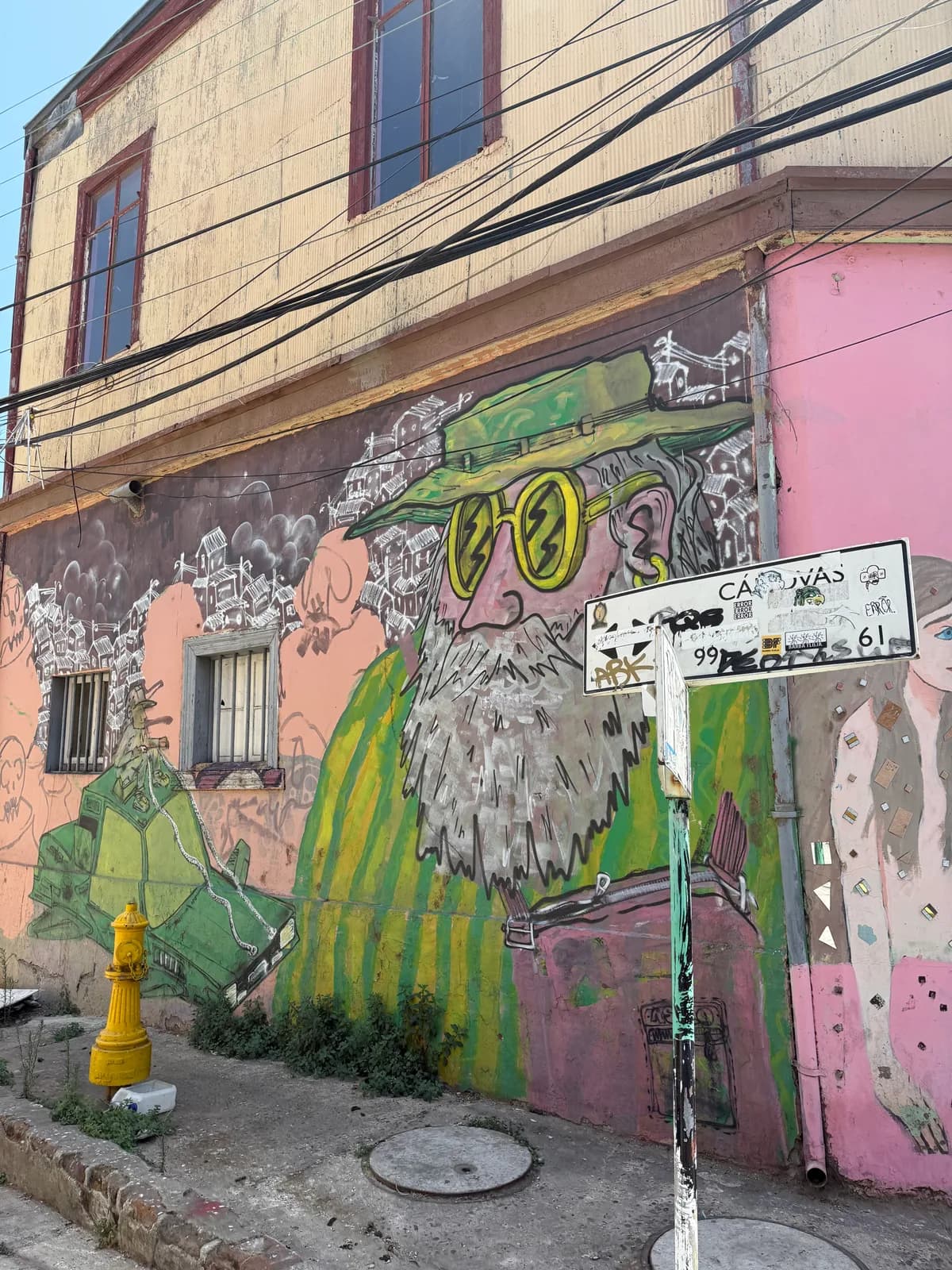
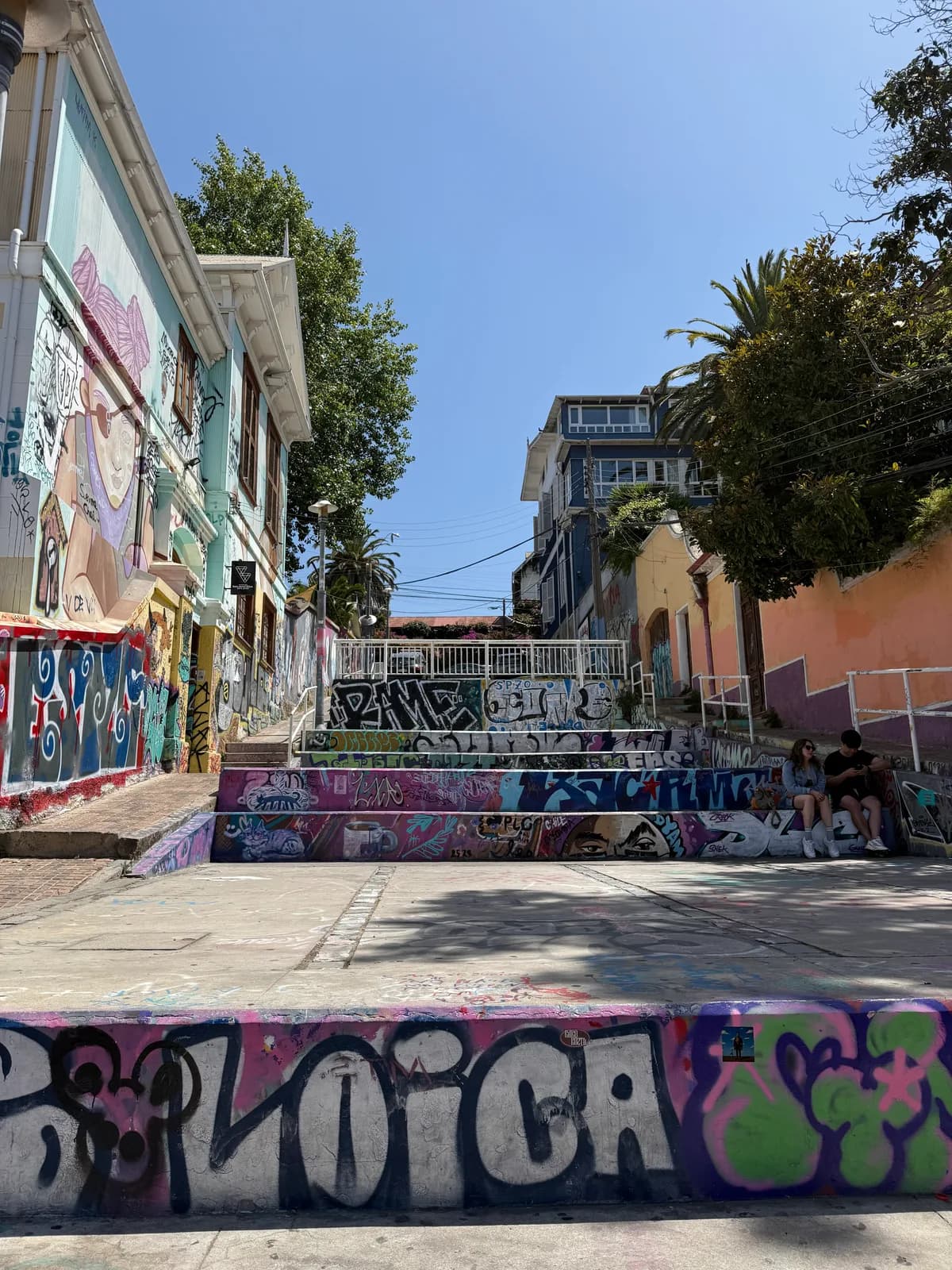
Salt, diesel, and sometimes fresh spray paint hit you before you clock the biggest pieces. Murals pour down stairways and across corrugated metal — the scale is bodily: you crane your neck, take another step, and the image wraps the landing you’re standing on. Chile’s mural lineage is long (mid-century political walls, Mexican influence), but Valparaíso’s port bohemia and earthquake-stripped façades turned the cerros into pigment and argument. From the 1990s, Chilean and visiting artists claimed whole staircases and buildings — sanctioned or not. The Museo a Cielo Abierto on Bellavista (1991) was an early formal frame; the city grew the gallery around it.
“Decoration” misses the point: the work takes sides, cracks jokes, grieves, and sometimes shouts.
Murals reflect:
Many artists use entire staircases and building facades as canvases.
The city is often described as an "open-air museum," but it's more accurate to say it's a living wall.
Valparaíso once had over 40 ascensores. Today, fewer operate, but they remain symbolic.
Built between the late 1800s and early 1900s, they were engineering solutions to impossible hills.
Riding one feels like stepping into a moving time capsule.
Each year, Valparaíso hosts one of the most extreme urban downhill races in the world.
Riders descend staircases, jump rooftops, and race through narrow alleys.
It perfectly reflects the city:
Steep. Fast. Unpredictable.
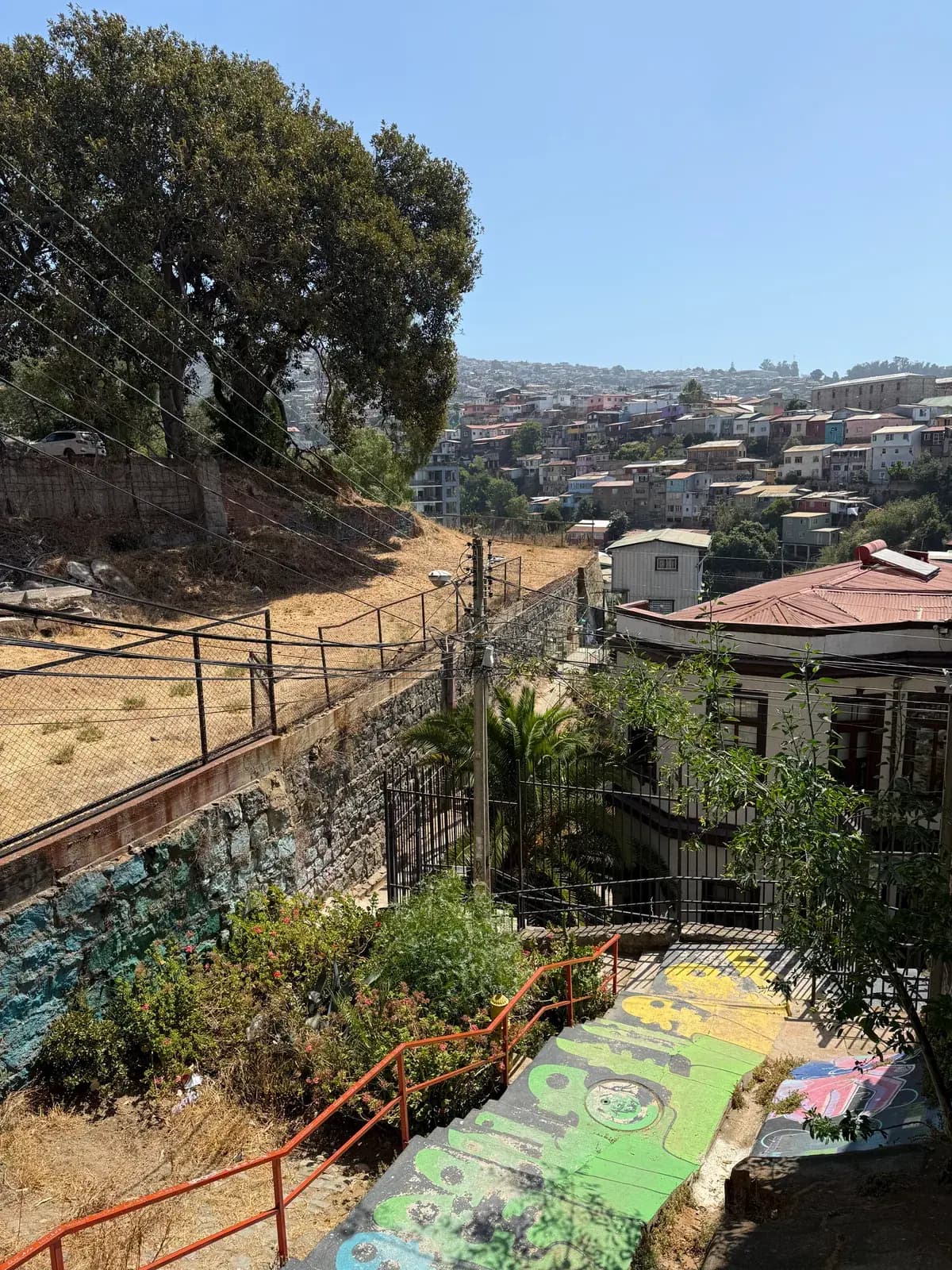
Valparaíso is still a working port. The docks move cargo; the navy keeps a major presence; and the fishing community has been here for generations. That daily rhythm — cranes, boats, and fish markets — runs alongside the tourist cerros. The lower city and the hills feel like two layers of the same place.
You will see:
The city is not staged for tourism. It functions independently of visitors. Cafés and hostels exist for travelers, but the port, the ferias, and the hills run on local life. That authenticity is what makes Valparaíso feel real.
Valparaíso sits in a seismic zone.
Large earthquakes in the past have triggered tsunamis. Today:
It's part of coastal Chilean life — preparedness, not panic.
Valparaíso has areas that require awareness.
Daytime in tourist hills is generally comfortable.
At night, empty staircases and poorly lit streets should be avoided.
Pickpocketing happens, particularly in crowded areas.
This is not a luxury resort city — it's a real port city. Awareness matters.
Driving in Valparaíso can be stressful:
Best strategy: