Chilean drinks carry fascinating origins and cultural stories that reflect the country's rich history—from ancient indigenous ingredients to colonial Spanish influences, and modern global adaptations. Each beverage tells a unique story of tradition and innovation.
From the bustling bars of Santiago to the quiet countryside celebrations, Chilean drinks are deeply woven into the fabric of daily life and special occasions. Here are the most beloved beverages and their cultural significance.
Emerged in the 1970s as an easy way to mix Chile's beloved pisco with a global soft drink.
Piscola is so popular that Chile celebrates the "Día de la Piscola" every February 8th.
Disputed between Chile and Peru, but the Chilean version is lighter and fruitier, often without bitters.
In Chile, Pisco Sour is usually made with pisco from the Elqui Valley, one of the driest places on Earth yet famous for vineyards.
Created after the 1985 Santiago earthquake, when journalists were served this strong but sweet drink at a bar called "La Piojera." They said: "Esto sí que es un terremoto" ("This really is an earthquake").
The second glass is traditionally called a "réplica" (aftershock).
A rustic countryside invention, mixing fresh fruit with cheap white wine for summer refreshment.
It's often drunk straight from the melon with a straw—perfect for sharing in groups.
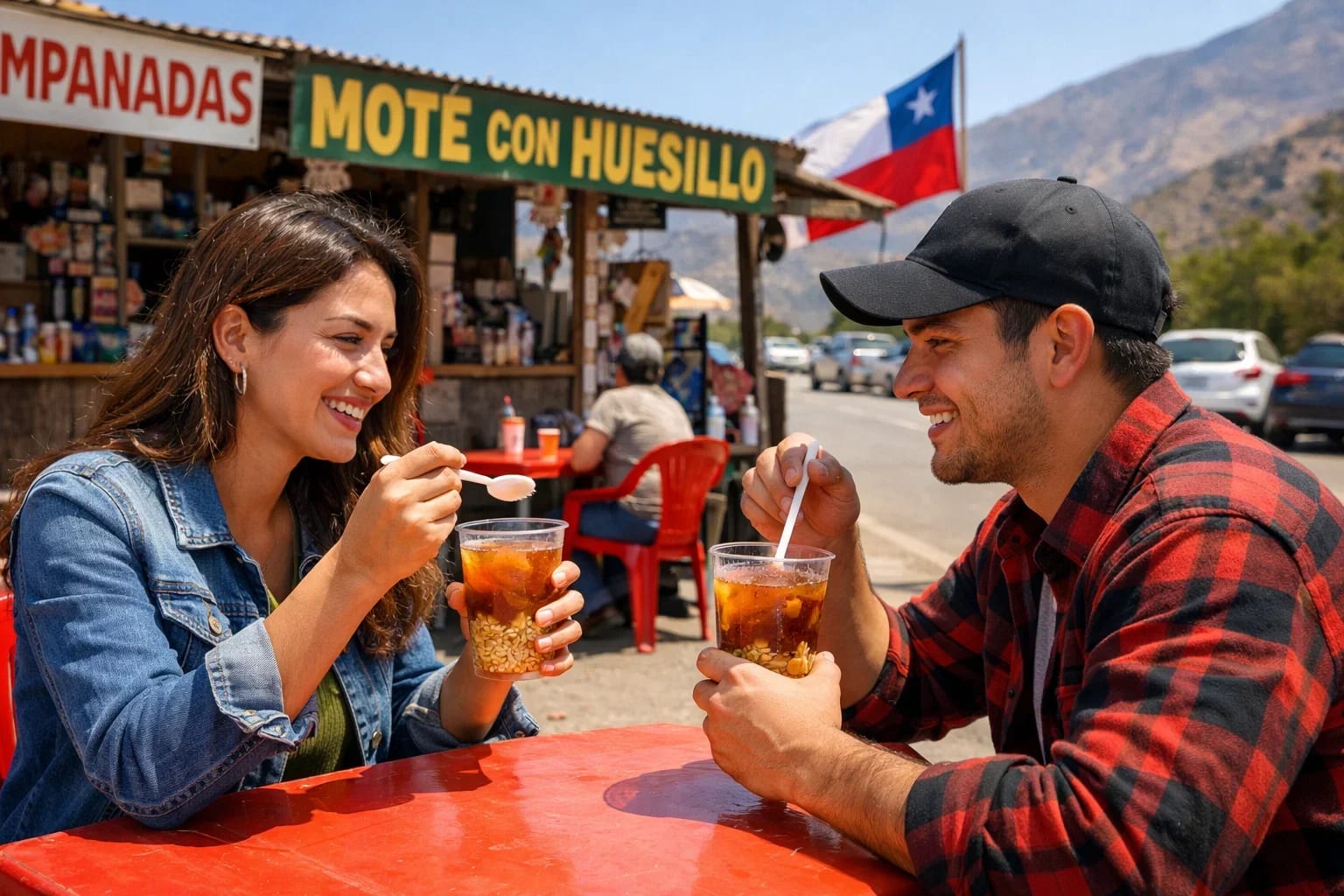
A non-alcoholic pre-Hispanic style drink, popularized in the 19th century. It blends native wheat (mote) with peaches (huesillos).
It is so iconic that Chileans say: "Un verano sin mote con huesillo no es verano" ("A summer without mote con huesillo is not a summer").
Named after the French Burgundy wines, but adapted in Chile with local red wine and strawberries.
It is especially popular during Fiestas Patrias in September and summer festivals.
Brought by the Spanish in colonial times, though it has roots in indigenous fermentation practices. Traditionally made from grapes or apples.
Drinking chicha is almost mandatory during Independence celebrations, especially in rural zones.
Comes from old European recipes, introduced to Chile by Spanish and Portuguese colonists. The name means "sheath" or "pod," but in this context it means "delicacy."
In the past, vaina was considered a ladies' drink at social gatherings, because it was sweet and elegant.
The word "ponche" comes from the Hindi word panch (five), referring to the original five ingredients in Indian punch: alcohol, sugar, lemon, water, and spices. Brought to Chile by the Spanish.
Chilean ponche is highly flexible—sometimes made with strawberries, peaches, or even milk and spirits during Christmas.
Chile's drinks are deeply tied to its history, climate, and celebrations. They embody the perfect blend of ancient indigenous ingredients like wheat and native fruits, colonial Spanish influences through wine and fermentation techniques, and modern global adaptations that create uniquely Chilean experiences.
"In Chile, every drink tells a story—from the earthquake that inspired Terremoto to the summer traditions that make Mote con Huesillo essential to the season."
Many Chilean drinks are closely tied to specific seasons and celebrations. Mote con Huesillo dominates the summer months, while Chicha flows freely during September's Independence celebrations. Ponche warms Christmas gatherings, and Borgoña adds festive color to national holidays.
Whether you're sharing a Melón con Vino with friends on a hot day or toasting with a Pisco Sour made from Elqui Valley pisco, these beverages connect you to generations of Chilean culture and the stories that shaped this remarkable country.
Rent a car and start your journey through these incredible destinations.
Browse Our Fleet